
The Bread That Doesn’t Ask Much of You
An easy no-knead bread recipe with slow fermentation, simple ingredients, and almost no hands-on time

There is a version of simple living that can start to look like another list of things to maintain.
Wake early. Feed the starter. Follow the old ways because they are old. Do things properly. Do them the way they have always been done.
I spent years close to that version.
And then I started asking a different question.
Does this actually make my life simpler?
Not: is this traditional?
Not: is this the most beautiful or impressive way to do it?
Just: does this fit the life I am trying to build?
The bread I make now does.
It is a slow, double-fermented dough that asks very little from me. About five minutes of actual hands-on time. No kneading. No starter sitting on the counter waiting for attention. No feeling like I have failed because life got busy and I forgot about it.
You mix flour, yeast, salt, and warm water in a bowl. Let it sit. Put it in the fridge.
That is it.
The dough waits.
Over the next few days, something quiet happens. The cold slows everything down. The flavour develops. The dough changes. It becomes something deeper than it was when you first mixed it together.
And the beautiful thing is that it does not need you hovering over it.
When you are ready, you bring it back to room temperature, shape it gently, let it rise, and bake.
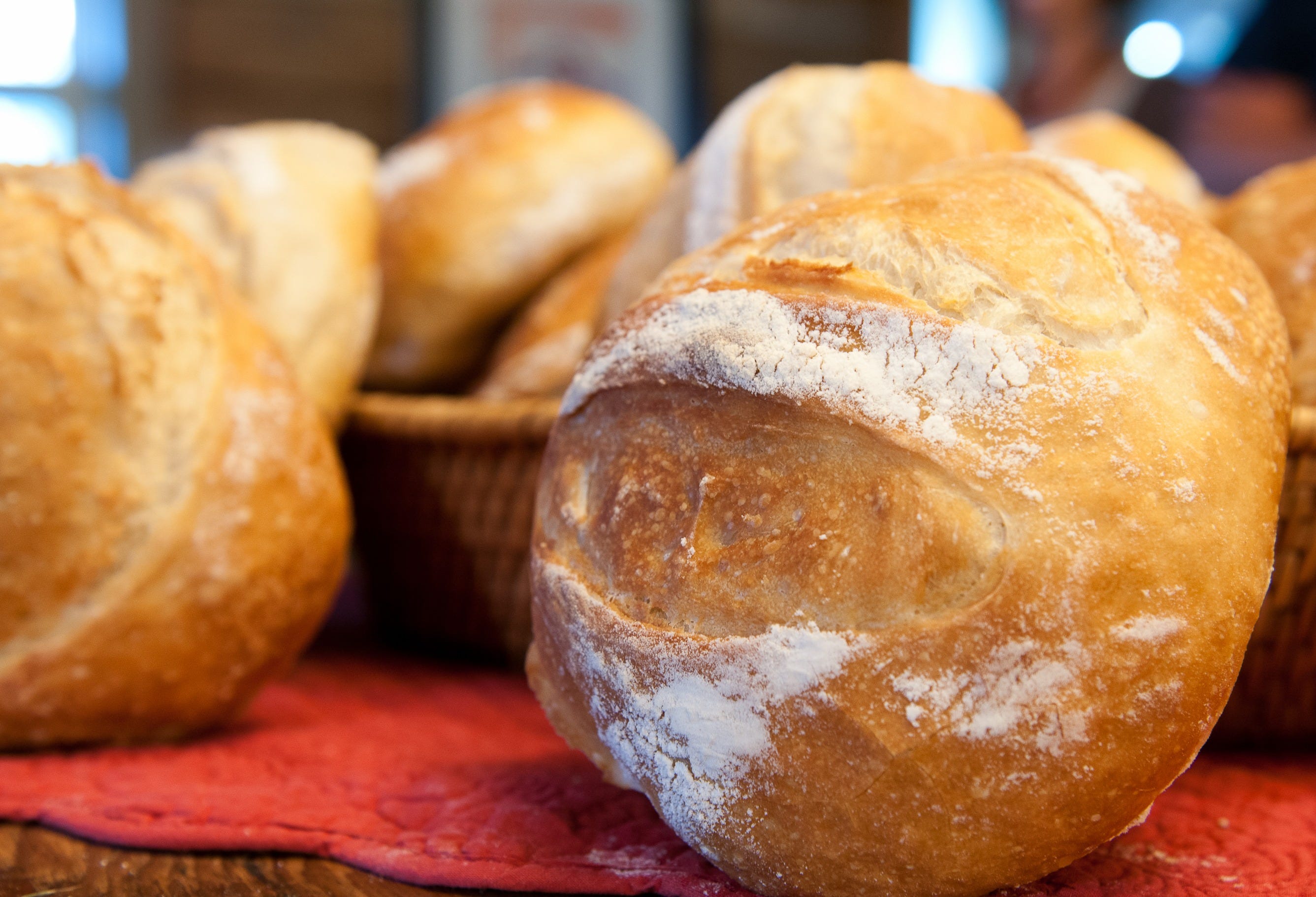
What comes out is a loaf with a crisp, crackling crust, a soft open crumb, and the kind of flavour that reminds you bread was always meant to be more than something that comes wrapped in plastic from a shelf.
There is one small step in this recipe that is worth understanding because it is what allows the bread to work without kneading.
The stretch and fold.
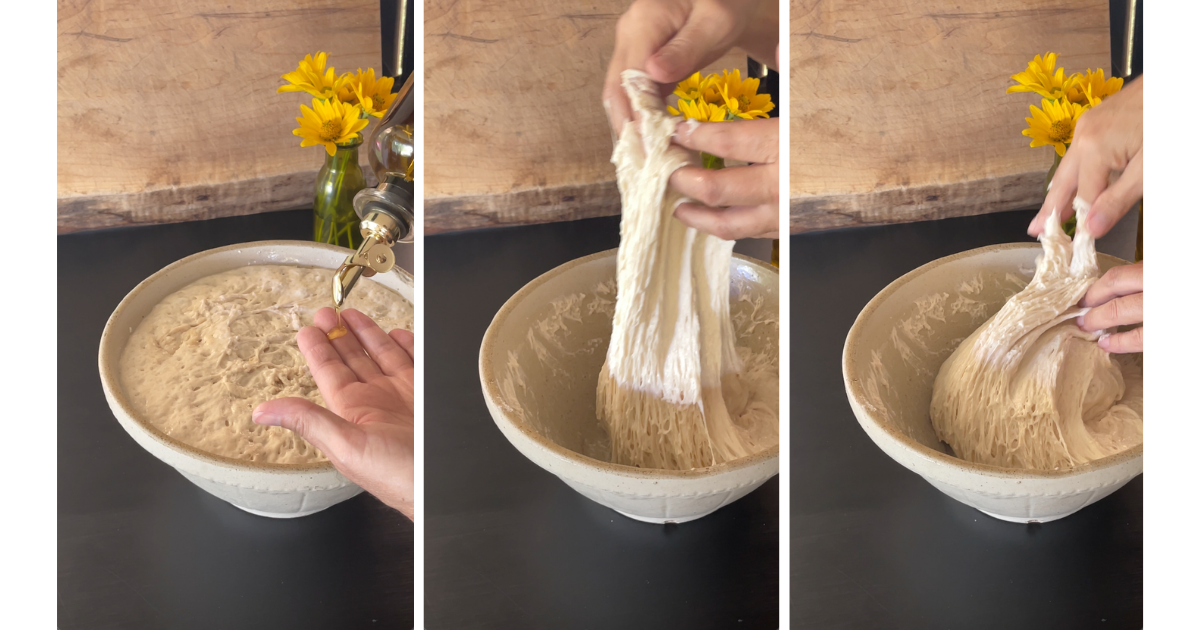
After the dough has rested, you oil your hands, lift one side of the dough, and gently fold it over itself. You repeat this around the bowl.
It takes seconds.
That small movement gives the dough what kneading would normally create. It strengthens the structure, helps it hold onto the air that has formed, and gives you that beautiful texture when it bakes.
I love this part because it is such a good reminder that strength does not always come from force.
Sometimes it comes from time.
Sometimes it comes from patience.
Sometimes things become what they are meant to become while we are busy doing other things.
The Recipe
Ingredients
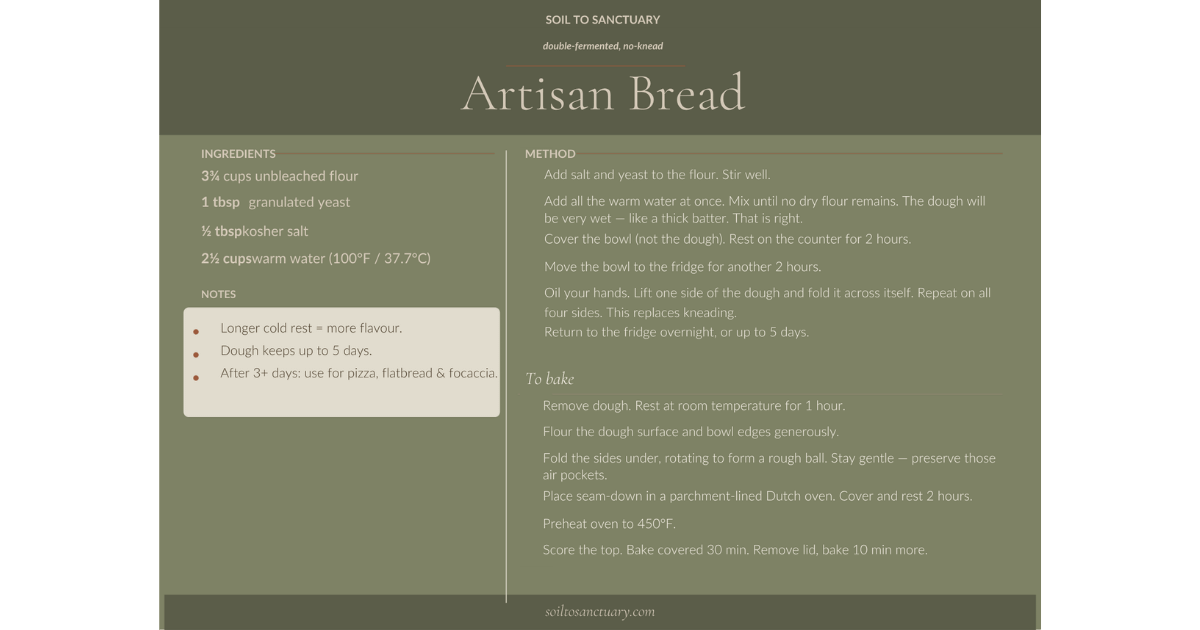
3¾ cups unbleached flour
1 tbsp granulated yeast
½ tbsp salt
2½ cups warm water (100°F / 37.7°C)
Method
Add the salt and yeast to the flour and stir well.
Add the warm water and mix until all the flour is incorporated from the bottom of the bowl.
The dough will be very wet. It will look more like a thick batter than a traditional bread dough. That is exactly right.
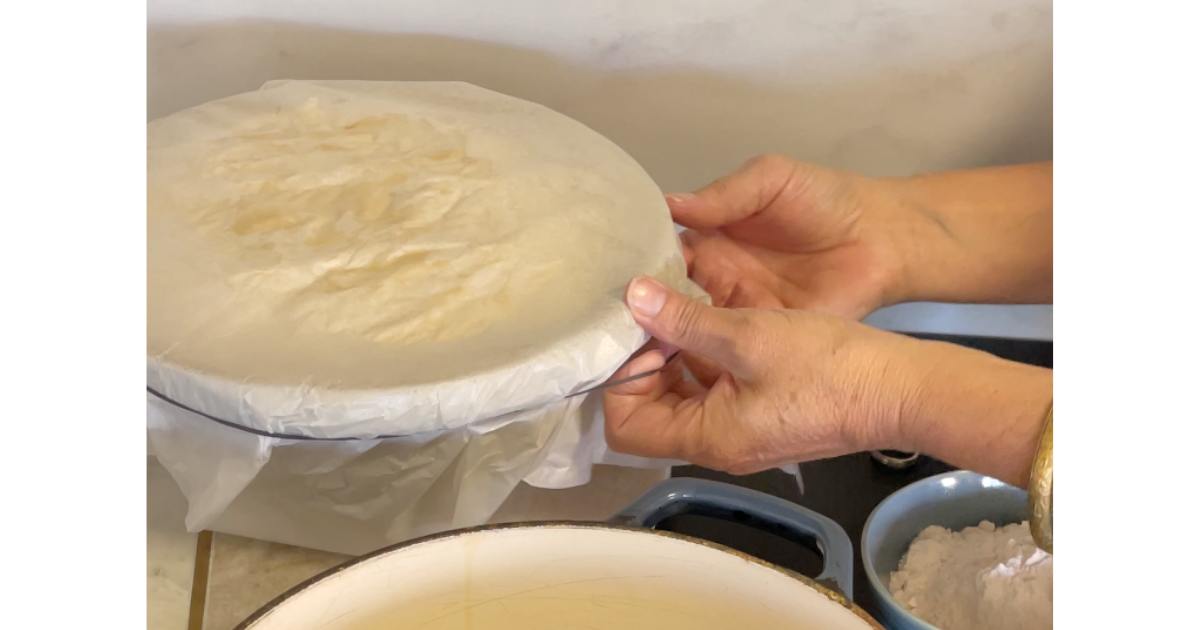
Cover the bowl (not the dough) and leave it on the counter for two hours.
Move the bowl to the fridge for another two hours.
Remove the dough from the fridge. Oil your hands and gently lift one side of the dough, folding it across itself. Repeat on all four sides.
Return the dough to the fridge overnight, or for up to 10 days. (I prefer to make bread the first 4 days and then I shift to pizza, flatbread, focaccia as it has less rise and works beautifully)
The longer it rests, the more flavour it develops.
When you are ready to bake:
Remove the dough from the fridge and allow it to come to room temperature for one hour.
Flour the surface of the dough and the edges of the bowl generously. The dough will be sticky and it will not feel like a traditional loaf of bread. That is part of what makes it work.
Be gentle here. The goal is to keep all those little pockets of air you have patiently created.
Turn the dough out and fold the sides underneath, rotating until you have a rough ball.
Place it seam-side down into a Dutch oven lined with parchment paper. Cover and let it rest for two hours.
Preheat your oven to 450°F.
Score the top of the loaf.
Cover and bake for 30 minutes.
Remove the lid and bake another 10 minutes, or until the crust is as dark and crisp as you like it.
A few notes
The longer the dough rests in the fridge, the better it becomes. A five-day dough will have noticeably more flavour than a two-day dough.
After four or more days in the fridge, this same dough becomes the base for pizza, flatbread, and focaccia.
Which is what the next piece is about.
This is bread that fits into ordinary days.
Not a project.
Not something else to manage.
Just flour, water, time, and a little bit of attention when you happen to have it.
Something simple that becomes part of your life.
-Angie
This is where I think simple food becomes really beautiful. The work is not in doing more. It is in making something once, letting time help you, and allowing it to become useful in different ways.
In the paid subscriber piece, I share three ways this same dough becomes the meals that carry us through the week: pizza, flatbread, and focaccia. Find it here

Sounds delicious and simple! Have you tried it in a bread pan vs Dutch oven?
Any ideas for how to do it if you haven’t got a fridge?