
Most People Buy Yogurt to Make Yogurt
For more than twelve years, one little jar in my freezer has quietly replaced the grocery store... making homemade yogurt simpler, steadier, and far less expensive.

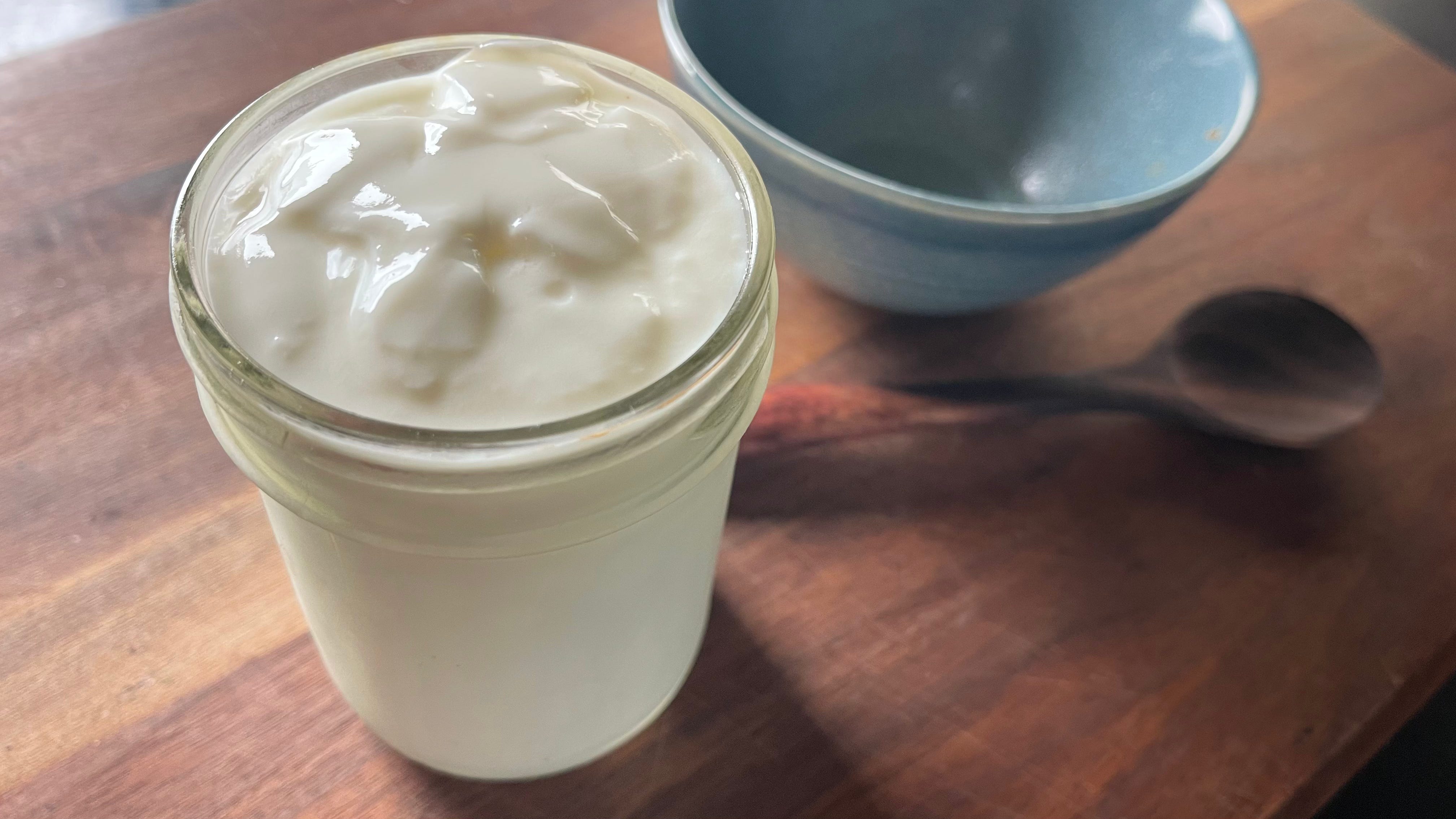
There is a jar of powder in my freezer that costs less than a stick of gum per batch.
It doesn’t look like much.
It never does—the quiet things rarely do.
That little jar has outlasted three homes, one farm, and a move to another country.
Here’s the thing almost nobody says out loud.
To make yogurt at home, most people buy yogurt.
A tub from the grocery store. Plain, with live cultures. A spoonful stirred into warm milk.
It works.
I did it for years.
But it’s a strange thing to build a habit on.
What a batch actually costs
I make mine six cups at a time. So let me count it honestly, six cups at a time.
Six cups of milk is where nearly all the cost lives… roughly $1.50 to $2.50, depending on your milk and where you live.
The culture is the part that surprises people.
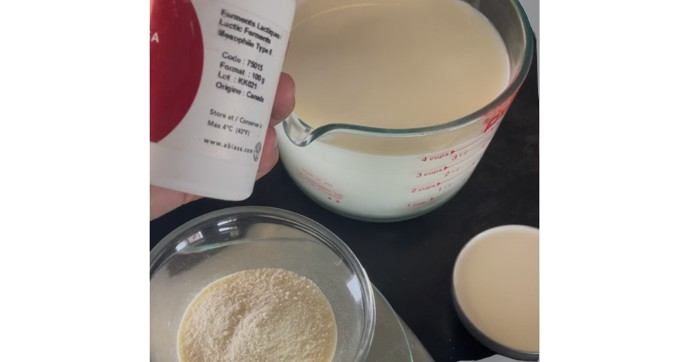
A freeze-dried starter, kept in the freezer, asks for about one-eighth of a teaspoon per six-cup batch.
One bulk packet costs about $15 where I buy it. At the rate I use it, that works out to roughly 160 batches of yogurt. About nine cents worth of culture each time.
Buy the same culture in small, single-dose packets and it costs more, often 60 cents to well over a dollar a batch… because you’re paying for the packaging, not more culture. Still quiet money, either way.
Now the tub.
A tub (or four individual servings) of plain yogurt costs around $4 to $6. Used as a starter, one spoonful at a time, it seems inexpensive… until it fades.
Store cultures are designed for a product on a shelf, not for making batch after batch. Most give you three or four good rounds before the yogurt starts setting more slowly or becoming thinner, and you’re back at the dairy case buying another tub to start again.
So the tub isn’t really a few cents a batch. It becomes a small, repeating errand… and every few batches you’re starting over again with someone else’s yogurt.
The part that isn’t about money
Yes, there’s a cost difference.
On the starter alone, a bulk culture costs only a fraction of what continually buying tubs of yogurt does over time.
But that’s honestly not why I’ve kept using it for more than twelve years.
A freeze-dried culture keeps in the freezer for well over a year or more without losing its strength. It sets the same way in January as it does in June. No stabilizers. No gums. No sweeteners you didn’t choose.
It isn’t really about saving pennies.
It’s about knowing that whenever I have milk, I can make yogurt.
And if you compare six cups of homemade yogurt to buying the same amount already made, that’s when the numbers become harder to ignore. Six cups of good plain yogurt at the grocery store is often $7 or more. The same six cups made at home costs closer to two dollars… nearly all of it milk.
It’s still yogurt.
But it feels like something different when it comes from your own kitchen instead of another trip to the store.
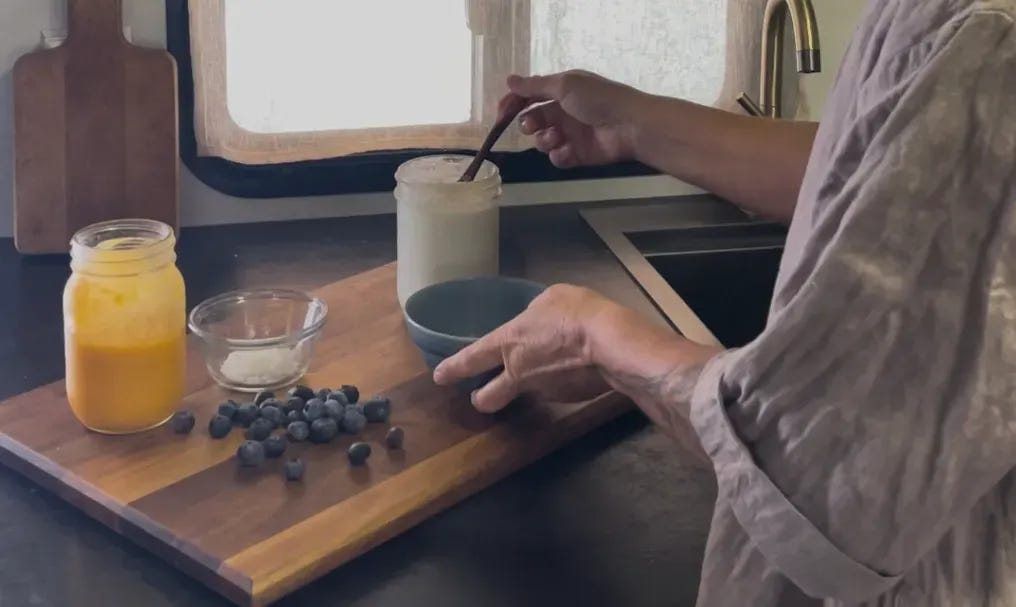
How I make mine
I’ve been using the same tub of freeze-dried culture for more than sixteen years! I had a heard of dairy cattle so indeed… I needed the bulk tub.
Combine:
6 cups whole milk
25 g skim milk powder (optional, but I like the thicker texture and extra protein)
1/4 cup heavy cream (also optional, but it gives the yogurt a beautiful finish)


Warm slowly to 180°F (82°C).
Allow the milk to cool to 105–115°F (40–46°C).
Then stir in:
1/8 teaspoon freeze-dried yogurt culture


Mix well and pour into clean jars.
Here’s my favourite part.
I don’t use a yogurt maker.
My Instant Pot simply becomes an insulated incubator. I place the jars inside, pour the hottest tap water I have around them, close the lid, and leave them overnight.
The vent needs to be CLOSED the Instant Pot is OFF the entire time.


By morning, the yogurt has set. The jars go into the refrigerator where they’ll firm up even more.
That’s it.
No straining.
No fussing.
Just smooth, beautiful yogurt.
You’ll notice this batch is a little softer than the yogurt I made years ago.
That’s simply because my culture is now more than twelve years old. It still works beautifully, but it doesn’t pull quite as tight as it once did.
I actually love that.
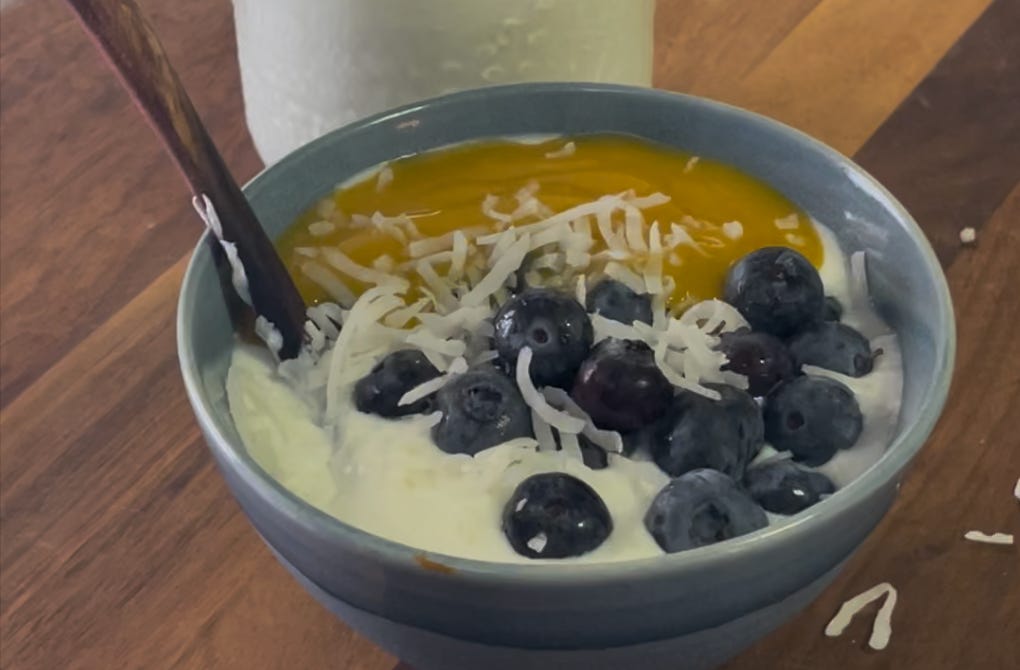
It reminds me how long one little tub has stayed with me.
And underneath all of it is the quiet convenience of knowing there’s always a few cents’ worth of culture waiting in my freezer.
Making your own doesn’t need to become a system, a discipline, or one more thing you’re supposed to do perfectly.
It’s simply a pot of milk, a pinch of culture, and an afternoon of leaving it alone.
If you make yogurt at home, I’d love to know how you started.
Did you begin with a tub from the grocery store, or with a freeze-dried culture?
And if you’ve found one you love, tell us what you’re using. We all learn from one another here.
—Angie
Sources for yogurt culture
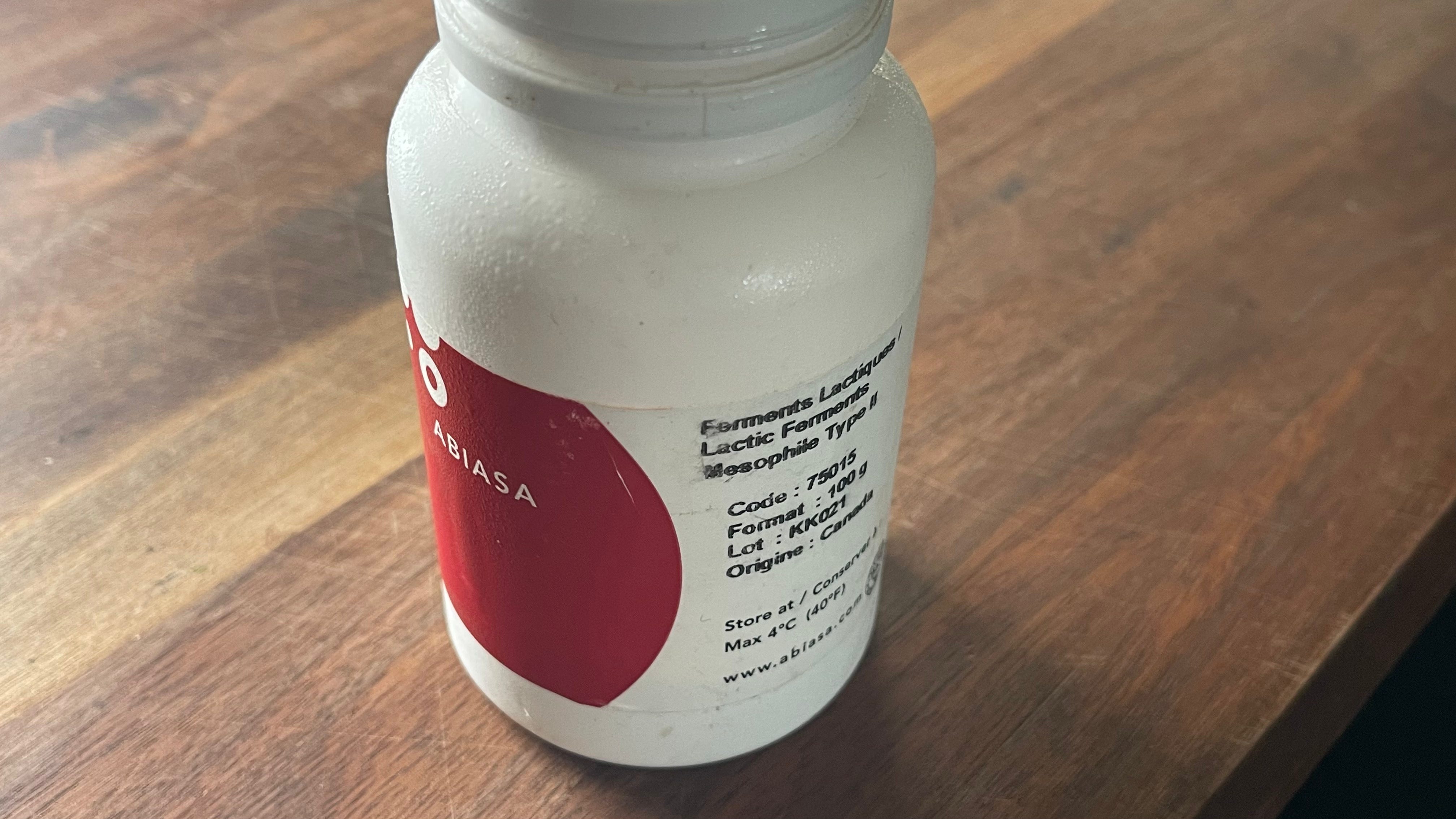
The culture I’ve used and trusted for more than twelve years:
New England Cheese – USA
Berry Hill Limited – Canada
Or search for freeze-dried yogurt starter culture from a supplier near you.
There are different strains of cultures you can use to make yogurt, this is simply my preference.
Many have question if it was my intention to link a cheese making culture. Yes, MA 11 Mesophilic Starter Culture gives a smooth, rich, creamy, non tangy finish which is my preference.
80yo guy here. I have been making yogurt, inconsistently, since my twenties. I learned the basics from my wife's grandmother. I have an instapot which will hold four 16 oz wide mouth jars. I wash my jars in my dishwasher and store them upside down. I do not heat my milk. I use either cow's milk or goat milk. My instapot has a yogurt setting and I set it for 30 hours. I have used yogourmet in the past five years and like the results. I have not figured out why my goat milk yogurt comes out thinner than cow's milk. Thank you for the reminder that I can use the whey as a starter. This is a good article to get people started and nice to see all the comments.
Thank you Angie💚… I’ve been wanting to reduce my plastic purchases… quite a mammoth task🥹
So not just cost… but those mountains of plastic… causing so much damage.
Thank you Angie🩷